MemoHoney Official Website › Articles › The arithmetic
The arithmeticHow much actually fits in one capsule
An ordinary size 0 supplement capsule holds roughly 450 to 800 mg of powder, and not all of that is active ingredient. Divided between six named ingredients, as on the MemoHoney label, that leaves each of them a small fraction of a gram, while the trials behind five of the six used between 2.4 and 12 grams a day of a single ingredient.
The question nobody asks at the checkout
Supplement pages are full of ingredient names and short of arithmetic. The arithmetic is usually the more interesting half, and on a once-daily capsule it comes down to a single question: how much powder is in there, and how is it divided up?
It is worth answering for any capsule, and it is worth answering particularly for a label like MemoHoney, whose six named ingredients were studied at amounts measured in grams.
MemoHoney is a dietary supplement and not a treatment for anything. Nothing here is medical advice. Memory that has changed in a way you or the people around you have noticed is worth an appointment rather than a purchase, and MedlinePlus sets out what is worth reporting.
What a capsule shell physically holds
Capsule shells come in standard sizes, and the numbers run backwards: a size 4 is small, a size 00 is the large one people complain about swallowing. Most once-daily supplement capsules are a size 0 or a size 00.
How much powder a shell holds depends on the shell and on how densely the powder packs, which varies a lot between materials. The figures below are the usual working ranges rather than precise constants.
| Shell size | Approximate volume | Typical powder fill | What it feels like |
|---|---|---|---|
| Size 3 | 0.30 ml | around 200 to 300 mg | Small, easy |
| Size 2 | 0.37 ml | around 250 to 400 mg | Small |
| Size 1 | 0.50 ml | around 350 to 500 mg | Ordinary |
| Size 0 | 0.68 ml | around 450 to 800 mg | The common supplement capsule |
| Size 00 | 0.95 ml | around 650 to 1,100 mg | Noticeably large |
Fill weight depends on powder density. A light, fluffy botanical fills a shell at a lower weight than a dense crystalline amino acid salt.
So the honest ceiling for a single ordinary capsule is somewhere under a gram of total powder, and often well under it. That is the whole budget, before anything is shared out.
It is also not all active. A finished capsule normally carries a flow agent so the powder fills evenly on a production line, sometimes a bulking agent, occasionally an anti-caking material. None of that is sinister, and all of it takes up room.
Now divide it six ways
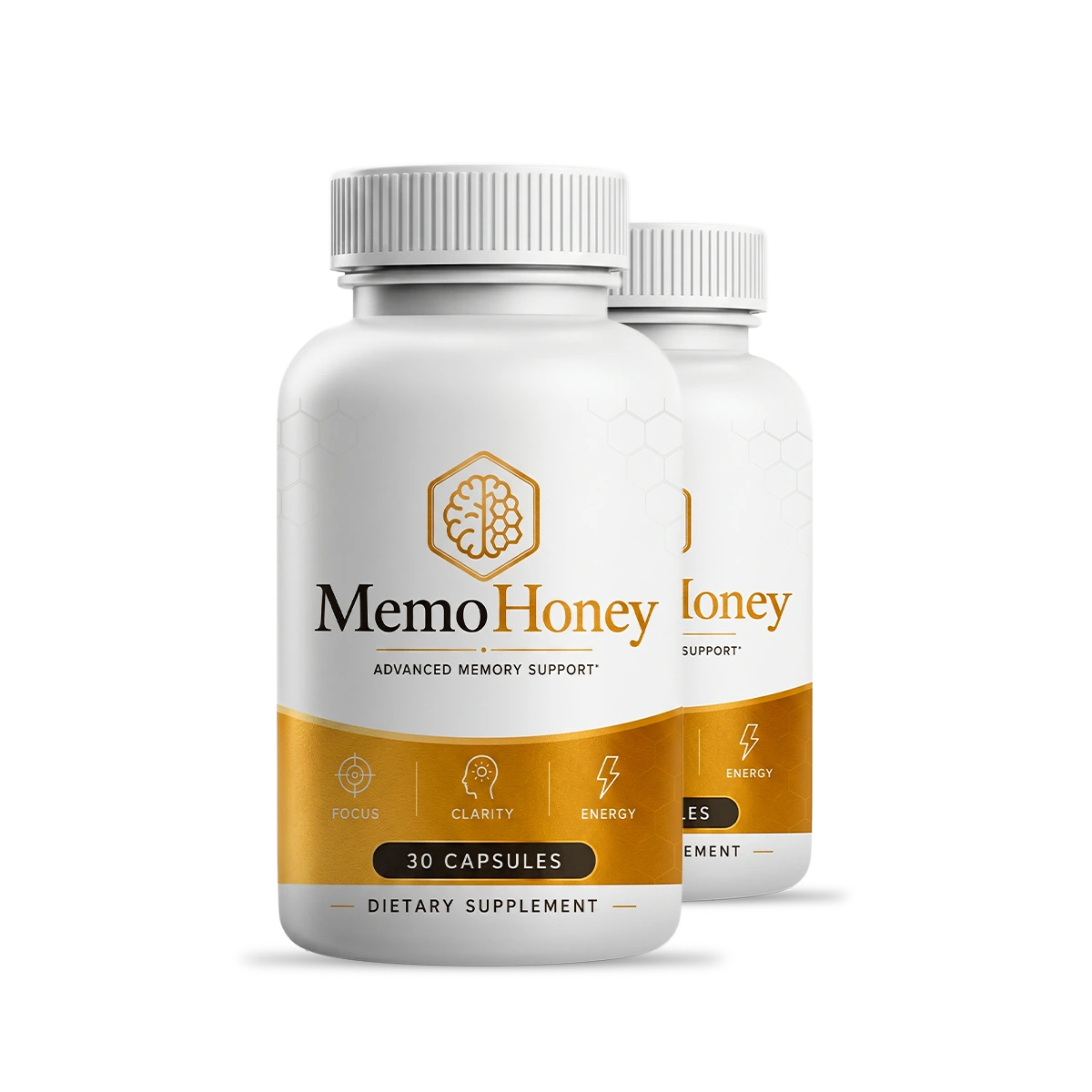
MemoHoney names six ingredients. If the capsule is a size 0 carrying 700 mg of powder, and if every milligram of it were active, the six would average under 120 mg each. In practice formulas are not divided evenly, and a vitamin like niacin needs only milligrams, which leaves more room for the others. But the total does not move.
Set that against what the research used.
| Ingredient | Amount a published trial used | What one capsule could plausibly carry |
|---|---|---|
| L-Arginine AKG | 12 g a day, split into three 4 g doses | A small fraction of one of those doses |
| L-Citrulline HCl | 8.8 g a day for five days | Under a fiftieth, if it took the whole capsule |
| L-Citrulline Malate | 8 g a day for three days | The same order of difference |
| Beta-Alanine | 2.4 g a day for the imaging trial | A fraction, sharing with five others |
| Niacin | a 35 mg upper intake level | This one fits easily, and is the only one that does |
The right-hand column is arithmetic on a capacity, not a criticism of a formula. It is what a once-daily capsule can do.
Five of these six ingredients were studied at amounts that a whole capsule could not carry on its own, let alone while sharing with five others. That is not a scandal; it is the arithmetic of the format, and it applies to a great many once-daily capsules on a great many shelves.
See every MemoHoney ingredient beside its trial amount
Six names, each printed next to what its own published research used, with the label's own column left exactly as the seller left it.
Two bottles $158 · six bottles $294 · 60-day money-back guarantee
Order MemoHoney From This CounterLot MEM-26/MA-5403 · one each morning, 30 to a bottle · ships from the United States
Why sellers do not simply use a bigger capsule
Because the constraints are commercial and practical rather than chemical, and all three push the same way.
- A size 00 capsule is noticeably harder to swallow, and a daily product lives or dies on whether people keep taking it.
- Two capsules a day doubles the cost of goods and halves the number of days a bottle covers, which changes the price ladder.
- Gram doses of amino acids are sold as powders precisely because they do not fit in capsules. A citrulline product intended to match the trials comes in a tub with a scoop.
- A larger capsule also costs more to fill and ship, and the difference is multiplied across a six-bottle order.
None of that is hidden. It is simply never stated on a sales page, because a sales page has no reason to draw attention to the gap between a capsule and a trial.
Does the gap always matter
Not always, and this is the part worth being fair about. Dose-response is not the same for every ingredient.
For a vitamin, a small amount can be the right amount. Niacin at 20 mg is doing everything niacin needs to do for most people; more is not better and past 35 mg a day it starts to flush.
For an amino acid working through a saturable pathway, the picture is different. Plasma arginine has to rise enough to change nitric oxide production measurably, and the trials that achieved that used grams. Below some threshold the effect is not smaller; it is absent.
Which of those two descriptions applies to a given capsule is exactly what a Supplement Facts panel would let a reader work out. The MemoHoney artwork does not carry one, so the question stays open, and this site prints the trial amounts rather than an estimate. The ingredients page has all six.
What a two-capsule serving would change
One obvious response to the arithmetic above is that a seller could simply ask for two capsules a day, or three. Some do. It is worth working through what that actually buys, because the answer is less than it sounds.
Two size 0 capsules is perhaps 1.4 grams of powder. Split six ways that is still around 230 mg an ingredient, against trials that used between 2.4 and 12 grams of one ingredient. Three capsules gets to maybe 2.1 grams, which is one trial dose of beta-alanine if the entire serving were beta-alanine and nothing else.
So multi-capsule servings narrow the gap without closing it, and they cost something real: a bottle covers a third or a half as many days, the price per day roughly doubles or triples, and adherence falls, because remembering three capsules is harder than remembering one.
- One a day: the easiest routine to keep, and the smallest possible dose.
- Two a day: roughly double the material, usually split morning and evening, which doubles the number of moments that can be forgotten.
- Three or more: approaching a trial dose for one ingredient only, and usually the point at which a seller switches to a powder instead.
- A powder with a scoop: the only format that reaches the amounts the citrulline and beta-alanine literature used.
That last row is the honest end of the ladder. If somebody wants the amount a trial used, the product they need is a tub, not a bottle, and it will cost less per gram than any capsule. What a capsule sells is convenience, and convenience is a real product with a real value; it is just not the same product as the trial.
How to run this arithmetic on any label
- Find the serving size on the Supplement Facts panel. One capsule, two capsules, a scoop: it changes everything that follows.
- Add up the amounts listed. If they total 600 mg in a capsule, that is a size 0 and it is full.
- Look for a proprietary blend. One total covering several ingredients means the arithmetic cannot be done, which is generally why it is there.
- Search PubMed for one ingredient and read the dose out of the abstract.
- Compare. If the trial used grams and the label lists milligrams, you have learned something useful in about three minutes.
That routine works on any shelf in any shop, and it is the single most useful habit a supplement buyer can have. It also explains, faster than any ingredient description, why so much of this category promises more than it can hold.
- Printed in 2006, “Pharmacokinetics, safety, and effects on exercise performance of L-arginine alpha-ketoglutarate in trained adult men” (Campbell B, Roberts M, Kerksick C, et al; Nutrition, 22(9):872-81) — PubMed record 16928472.
- Printed in 2025, “The effects of L-citrulline supplementation on cerebrovascular function during sprint interval training in taekwondo athletes” (Li A, Li H, Chen J; J Exerc Sci Fit, 23(3):222-228) — PubMed record 40474881.
- Printed in 2024, “Effects of 3 days of citrulline malate supplementation on short-duration repeated sprint running performance in male team sport athletes” (Faria VS, Egan B; Eur J Sport Sci, 24(6):758-765) — PubMed record 38874989.
- Printed in 2024, “β-Alanine supplementation improves fractional anisotropy scores in the hippocampus and amygdala in 60-80-year-old men and women” (Ostfeld I, Zamir A, Ben-Zeev T, et al; Exp Gerontol, 194:112513) — PubMed record 38971131.
- Printed in 2017, “Definition of a tolerable upper intake level of niacin: a systematic review and meta-analysis of the dose-dependent effects of nicotinamide and nicotinic acid supplementation” (Minto C, Vecchio MG, Lamprecht M, et al; Nutr Rev, 75(6):471-490) — PubMed record 28541582.
- MedlinePlus, US National Library of Medicine: “Memory” — medlineplus.gov.