MemoHoney Official Website › Articles › Buying
BuyingWhat a 60-day money-back window really promises
A 60-day money-back guarantee means the seller will take the product back within 60 days and return what you paid. It is a statement about the seller's expected return rate, not about the formula. Four details decide whether it is usable: the date it is counted from, whether opened bottles count, who pays the postage, and how a claim is made.
What a money-back window actually says
A 60-day money-back guarantee is a commercial promise with a precise content: the seller will take the product back within a stated period and return what you paid for it. That is the whole of it.
It is worth being blunt about what it is not, because the way these windows are advertised invites a different reading. A long guarantee is not evidence that a product works. It is not a clinical claim. It is not a statement about the formula at all. It is a statement about the seller's expected return rate, and the two things it really signals are confidence in the margin and confidence that most people will not bother.
MemoHoney is a dietary supplement and not a treatment for anything. Nothing here is medical advice. Memory that has changed in a way you or the people around you have noticed is worth an appointment rather than a purchase, and MedlinePlus sets out what is worth reporting.
The economics underneath it
Refund windows are priced like insurance. A seller knows roughly what proportion of buyers will claim, and prices the product so that the claims are covered. Lengthening the window usually raises claims by less than people expect, because the main driver of a refund is dissatisfaction in the first fortnight, not the length of the window.
There is a second effect, which is why long windows spread through this category. A longer window reduces hesitation at the checkout more than it increases claims afterwards. It is one of the cheapest conversion improvements a direct seller can make.
Neither of those is dishonest. They explain why a 60-day window and a 180-day window sit side by side on similar products with no difference in what is inside the bottle.
| What a window signals | What it does not signal |
|---|---|
| The seller expects few claims | That the product works |
| The margin can absorb the claims that come | That anything has been tested |
| The seller has a returns process that functions | That the ingredients are at effective amounts |
| Somebody can be reached to make a claim | That a clinician was involved anywhere |
| The offer is aimed at hesitant first-time buyers | Anything about how long the product takes to act |
Read the left column as useful information about the seller and the right column as the inference the advertising invites.
Four questions that separate a usable window from a decorative one
Length is the least informative thing about a guarantee. Four other details decide whether it is worth anything, and they are all findable in about two minutes.
- From what date is it counted? Purchase, dispatch or delivery. Purchase is the shortest and the clearest, because it is the one date a buyer can identify without guessing.
- Does it require unopened product? A window that only covers sealed bottles is not a trial period, it is a returns policy.
- Who pays the return postage? Almost always the buyer. Worth knowing before rather than after.
- How is a claim made? A telephone number that a person answers is worth more than a form, because a form can be ignored without anybody having to say no.
On those four, this product does reasonably well: 60 days from the date of purchase, opened bottles included, buyer's postage, and a claim made by telephone to the order desk. The refund policy sets all of it out in full, and the seller repeats the same window on its own published page, which is a useful cross-check.
Order MemoHoney with the window in front of you
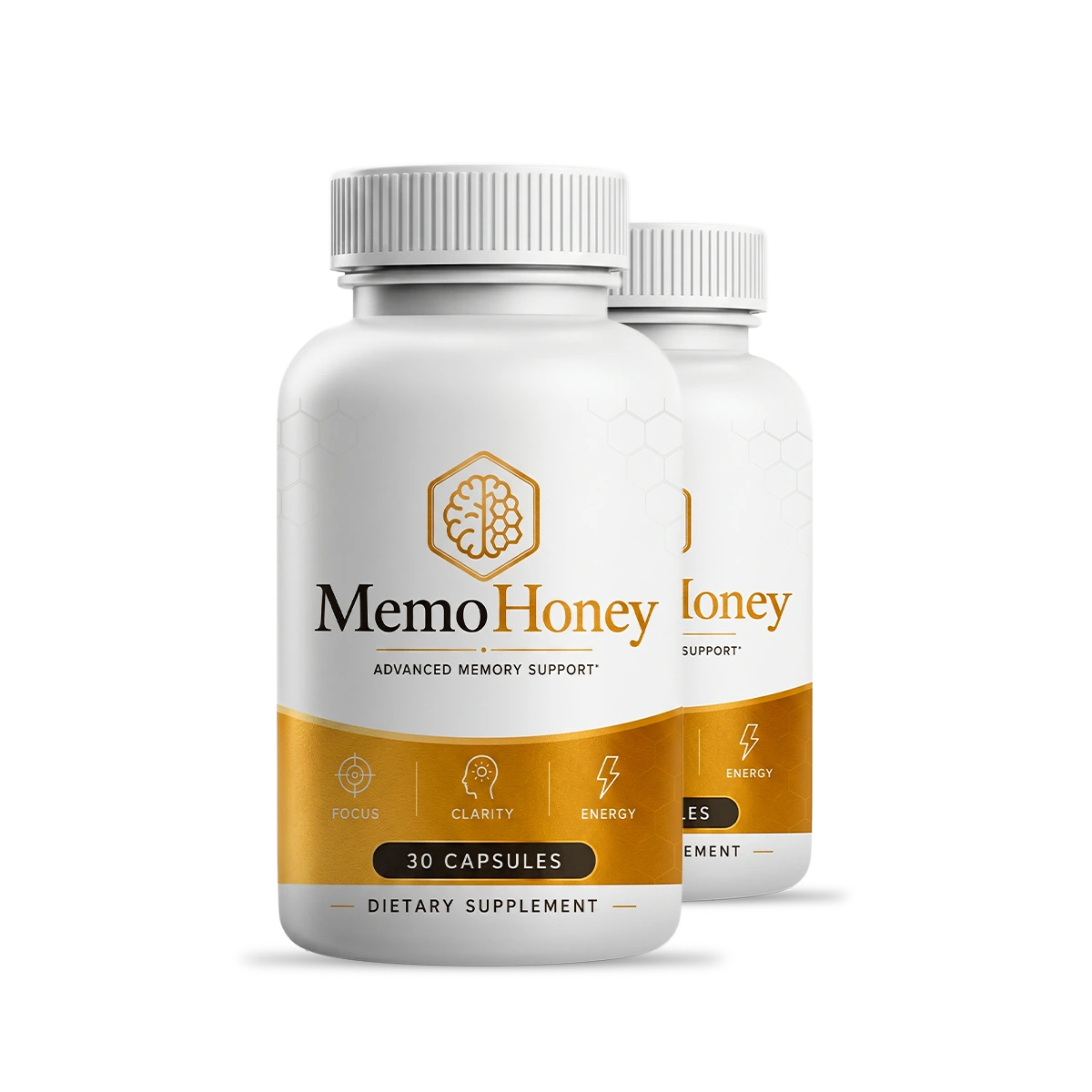
60 days counted from the day you pay, opened bottles included, claimed on the telephone, with the seller repeating the same terms on its own page.
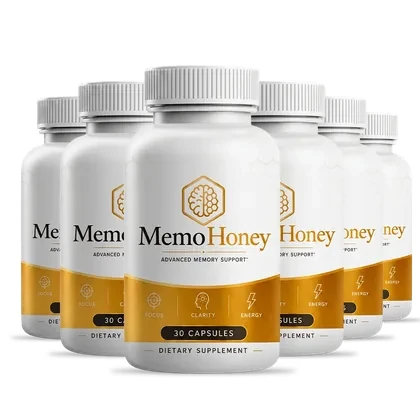
Two bottles $158 · six bottles $294 · 60-day money-back guarantee
Order MemoHoney From This CounterLot MEM-26/MA-5403 · one each morning, 30 to a bottle · ships from the United States
Why the direction of the count matters more than the number
This is the detail that catches people, and it is worth a section of its own.
A purchase happens, then a parcel is dispatched, then it is delivered. Those are three different dates and they can be a week or more apart. A window counted from purchase closes earlier than one counted from delivery, which sounds worse for the buyer and is actually better, because the purchase date is the one date a buyer can identify with certainty. It is on the confirmation email and on the card statement.
Work from the purchase date and you cannot be late by accident. Work from the delivery date on a policy that counts from purchase and you may be a week over, which is the difference between a refund and a conversation about one.
A six-bottle order is 180 days of capsules. The window is 60 days. By the time the deadline arrives you will have taken about a third of what you paid for, and four full bottles will still be on the shelf. The refund covers the whole order rather than the unused part, so nothing is lost, but the decision has to be made long before the stock runs out.
How to actually use a window rather than let it lapse
- Write the purchase date on the first bottle in marker, on the day it arrives.
- Add 60 days and put that date in a calendar with a reminder a week before it.
- Decide in advance what you are going to judge: one specific thing you will notice or not notice.
- Keep a two-word daily note, because the faculty under assessment is the one you would otherwise be relying on to remember.
- Read the notes at week eight, before the reminder, and make the call.
Five steps, about ten minutes of effort in total, and they are the difference between a guarantee that protects you and one that exists as a graphic on a carton.
When a window does not apply at all
Three situations, all of which come up.
- A bottle bought from a marketplace or a resale listing rather than the seller's own checkout. There is no order record to claim against, and the channel page explains why.
- A parcel that never arrived. That is a delivery matter, resolved through dispatch records with the carrier, not through a refund policy.
- A download. The five digital guides cannot be returned and do not enter the calculation either way.
And one situation where the usual expectation bends in the buyer's favour: if the product physically disagreed with you, stop taking it and say so plainly on the call. The 30-day use request describes a buyer who is unimpressed, not somebody who had a reaction.
How this window compares with the rest of the category
Direct-response supplements commonly advertise 60, 90 or 180 days, and the length is chosen for the sales page rather than for the product. Comparing two offers on length alone therefore tells you almost nothing. Comparing them on the four questions above tells you a lot.
| Feature | Weak version | Strong version |
|---|---|---|
| Counted from | Delivery, or an unstated date | The date of purchase, stated plainly |
| Condition on the product | Unopened bottles only, or the original packaging intact | Opened bottles accepted, with a period of use asked for |
| Claim route | A web form, with no telephone number anywhere | A telephone number printed on every page |
| Return address | A post box, or no address until you ask | A street address published before the sale |
| Where it is stated | An image on a sales page | In words, on the seller's own page and on the retailer's |
A window can be long and weak or short and strong. The right column is what makes one usable.
There is one more comparison worth making, and it is with the rest of the carton. A supplement label is covered in marks: made in a country, manufactured under good practice, registered with an agency, free from this or that. Almost none of them can be checked by a buyer, because almost none names a body that stands behind it.
The refund window is the exception. It is written in words, it names a period and a method, and there is a telephone number attached to it. That makes it the single most checkable statement on most cartons, which is a strange thing to be true and is worth knowing.
What to take from all of this
A money-back window is worth having and worth reading. It is one of the few things on a supplement carton that is genuinely checkable, which puts it well ahead of most of the seal wall.
It is also a promise about money, and the moment it starts being read as a promise about results is the moment it stops being useful. The guarantee page sets out the claim procedure step by step, and the pricing page explains why the pack you choose changes how much of the window you will have used by the time it closes.
- US Food and Drug Administration: “Questions and Answers on Dietary Supplements” — fda.gov.
- National Center for Complementary and Integrative Health, National Institutes of Health: “Using Dietary Supplements Wisely” — nccih.nih.gov.
- MedlinePlus, US National Library of Medicine: “Memory” — medlineplus.gov.
- Printed in 2023, “Multivitamin Supplementation Improves Memory in Older Adults: A Randomized Clinical Trial” (Yeung LK, Alschuler DM, Wall M, et al; Am J Clin Nutr, 118(1):273-282) — PubMed record 37244291.