MemoHoney Official Website › Articles › The routine
The routineHow to Take MemoHoney: Why the Label Says Morning, Before Food
To take MemoHoney, swallow one capsule a day with a full glass of water, preferably in the morning before a meal. That one label line holds three instructions. The water is mechanical, so the capsule goes down cleanly. Before food is about amino acid absorption. The morning is about adherence, which matters more than either, because a daily capsule fails on the days it is forgotten.
The line on the label
“Take 1 capsule daily with a glass of water, preferably in the morning before a meal.” That is the whole of the MemoHoney directions, and it contains three separate instructions: one capsule, with water, in the morning before a meal.
None of them is explained anywhere in the pack, and two of them have reasons worth knowing. The third has a reason that matters more than either.
MemoHoney is a dietary supplement and not a treatment for anything. Nothing here is medical advice. Memory that has changed in a way you or the people around you have noticed is worth an appointment rather than a purchase, and MedlinePlus sets out what is worth reporting.
Why with a glass of water
This is the least interesting of the three and the one most often ignored. A capsule swallowed dry can lodge in the oesophagus, where the shell softens and the contents release against tissue that is not built for them. That is uncomfortable rather than dangerous, and a full glass of water prevents it entirely.
A full glass, not a sip. The instruction exists because people take capsules with the last mouthful of coffee and then wonder why their chest feels odd for an hour.
Why before a meal
This one is chemistry, and the seller does not explain it, so here it is.
Amino acids are absorbed from the small intestine by transporter proteins, and those transporters are shared. The amino acids in a meal compete for the same routes as the amino acids in a supplement, which means a dose taken with food arrives more slowly and in smaller peaks than the same dose taken alone.
For a formula built on raising plasma arginine, peaks matter. A human study of citrulline availability manipulated citrulline supply directly and shows how sensitive the system is to what else is happening in the gut, and a combination study of citrulline and arginine measured how quickly plasma arginine rises when the two are given together.
| Taken | What happens to absorption | What it means in practice |
|---|---|---|
| On an empty stomach | Least competition for intestinal transporters, a faster and higher peak | What the label asks for, and the theoretical best case |
| With a light breakfast | Some competition, a flatter curve | A reasonable compromise if an empty stomach is uncomfortable |
| With a protein-heavy meal | The most competition, from the amino acids in the food itself | The least favourable timing for this particular formula |
| At night | Absorption is fine; the issue is different | Loses the routine anchor, which matters more than the chemistry |
None of these makes a capsule useless. They change the shape of a curve that nobody has shown produces a cognitive result anyway.
Why the morning, which is the important one
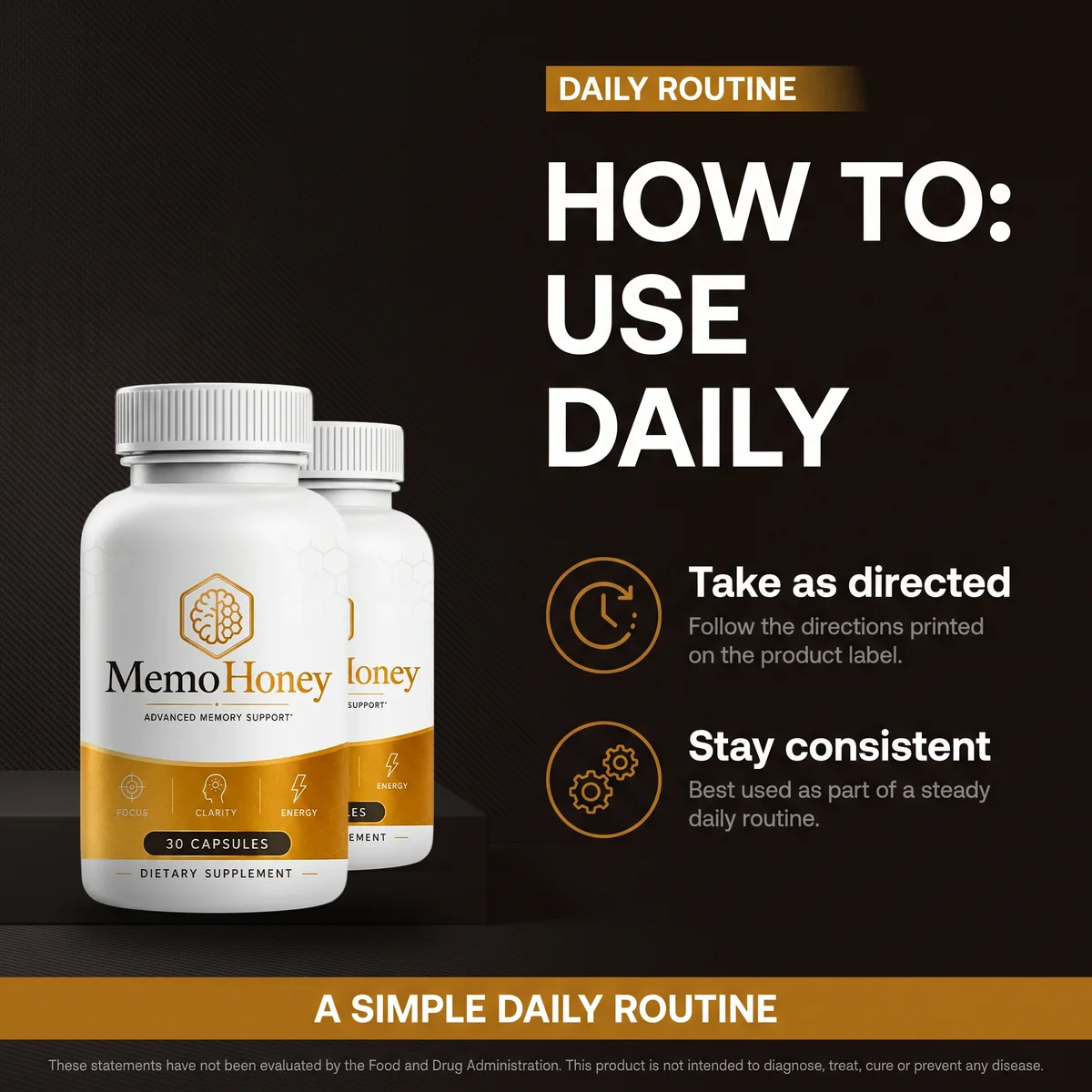
The absorption argument would work equally well before lunch or before dinner. The morning instruction is not really about chemistry at all, and the reason it is the most important of the three is adherence.
A daily supplement fails on the days it is forgotten. Nothing else about it matters as much: a perfectly dosed capsule taken on nineteen mornings out of thirty is a worse product than a modest one taken on all thirty. And mornings are the part of the day with the most reliable structure in them.
- The morning has fixed anchors almost everybody already has: waking, the kettle, the first glass of water, the toothbrush.
- It happens before the day can rearrange itself, which evenings cannot promise.
- It is the same time at weekends, roughly, which a work-based cue is not.
- A missed morning is noticeable, because the bottle is still where you left it.
Attach the capsule to something you already do without deciding. The decision is the step that fails, and removing it is worth more than any refinement of the timing. Reviewers on the seller's own page who report the best experience describe a routine rather than a result.
Start the MemoHoney routine tomorrow morning
One capsule, a full glass of water, before food. 30 to a bottle, and 60 days from purchase to decide it is not for you.
Two bottles $158 · six bottles $294 · 60-day money-back guarantee
Order MemoHoney From This CounterLot MEM-26/MA-5403 · one each morning, 30 to a bottle · ships from the United States
What to do if an empty stomach does not suit you
Amino acids taken alone are the most common cause of the mild nausea people report from capsules of this kind. It is not universal and it usually settles, but it is real.
The practical answer is to take it with a small breakfast rather than before one. That trades a little absorption for a capsule you keep taking, and given that nobody has shown the absorption peak produces a cognitive outcome anyway, it is a trade worth making without much agonising.
- Try it on an empty stomach for the first week, as the label asks.
- If it is uncomfortable, move it to with a small breakfast rather than skipping it.
- Keep the time of day fixed even if the food changes, so the anchor survives.
- If discomfort persists past a few days, stop and speak to a clinician before restarting.
What happens if you move it to the evening
People ask this often enough to deserve a proper answer rather than a restatement of the label. The short version: it is not a problem, and it costs you something that is not chemistry.
Absorption in the evening is fine. The transporters do not keep office hours, and an empty stomach before dinner behaves much like an empty stomach before breakfast. Nothing on this label is a stimulant, so there is no obvious reason it would disturb sleep, though anybody who is sensitive to niacin flushing may prefer not to meet it at bedtime.
What the evening costs is reliability. Mornings have a fixed shape that survives a bad day; evenings do not. A capsule attached to dinner is a capsule missed on the evenings dinner is late, skipped or eaten somewhere else, and across a 30-day bottle those add up faster than people expect.
| Timing | Absorption | Adherence | Worth it |
|---|---|---|---|
| Morning, before food | The label's preference | The most reliable anchor in the day | Yes, if it suits your stomach |
| Morning, with breakfast | Slightly flatter curve | Identical | Yes, and better than skipping it |
| Midday | Fine on an empty stomach | Weakest anchor of the three | Only if the day is genuinely regular |
| Evening | Fine | Least reliable, and the one people abandon | Acceptable, if it is the only time you will actually keep |
The right time is the one you will keep for eight weeks. Everything else in this table is a rounding error beside that.
Missed doses, doubling up, and other practical questions
Three questions arrive by email more than any others about the routine, and all three have short answers.
A missed morning
Take it when you remember or skip it and carry on the next day. Do not take two to catch up. The label gives one capsule and no higher dose, and there is nothing to catch up with: this is not a medicine with a therapeutic level to maintain.
Opening the capsule
Not recommended. The shell is doing a job, and the contents are a powder blend with nothing to recommend them by taste. If capsules are genuinely difficult for you, that is worth knowing before ordering six bottles, because there is no alternative presentation to switch to.
Taking it with coffee
No known interaction, and no stimulant on this label for caffeine to add to. The only caution is the practical one: coffee is not a glass of water, and the capsule still wants one.
Choosing an anchor that survives a bad week
The whole of the morning argument comes down to picking one cue and sticking to it, so it is worth being specific about what makes a good one. A workable anchor has three properties: it happens every single day, it happens at roughly the same point in the sequence, and it happens in the same room as the bottle.
That third one is the property people skip, and it is the one that decides most abandoned bottles. A cue in the kitchen with a bottle in the bedroom is not a cue; it is a reminder to walk somewhere, which is an entirely different and much weaker thing.
- The kettle or the coffee machine, with the bottle beside it.
- The first glass of water, which also solves the water instruction.
- The toothbrush, if the bathroom is dry enough to keep a bottle in, which it usually is not.
- Feeding a pet, which is the most reliable daily event in a lot of households.
The routine, in four lines
- One capsule, with a full glass of water, in the morning, before food.
- Attached to something you already do, so it does not require a decision.
- Every day, including the days you feel fine, for four to eight weeks.
- With the purchase date written on the bottle, because the 60-day window is counted from it.
The how to take it page covers the same ground with the stacking questions attached, and the results timeline sets out what the four to eight weeks are supposed to contain.
- Printed in 2007, “Manipulation of citrulline availability in humans” (Rougé C, Des Robert C, Robins A, et al; Am J Physiol Gastrointest Liver Physiol, 293(5):G1061-7) — PubMed record 17901164.
- Printed in 2014, “Oral supplementation with a combination of L-citrulline and L-arginine rapidly increases plasma L-arginine concentration and enhances NO bioavailability” (Morita M, Hayashi T, Ochiai M, et al; Biochem Biophys Res Commun, 454(1):53-7) — PubMed record 25445598.
- Printed in 2026, “Quantitative characterization of L-citrulline as a precursor of L-arginine in rats: pharmacokinetic basis for nitric oxide-mediated effects” (Song S, Thapa SK, Upadhyay M, et al; Front Pharmacol, 17:1889835) — PubMed record 42755674.
- National Center for Complementary and Integrative Health, National Institutes of Health: “Using Dietary Supplements Wisely” — nccih.nih.gov.
- MedlinePlus, US National Library of Medicine: “Memory” — medlineplus.gov.